
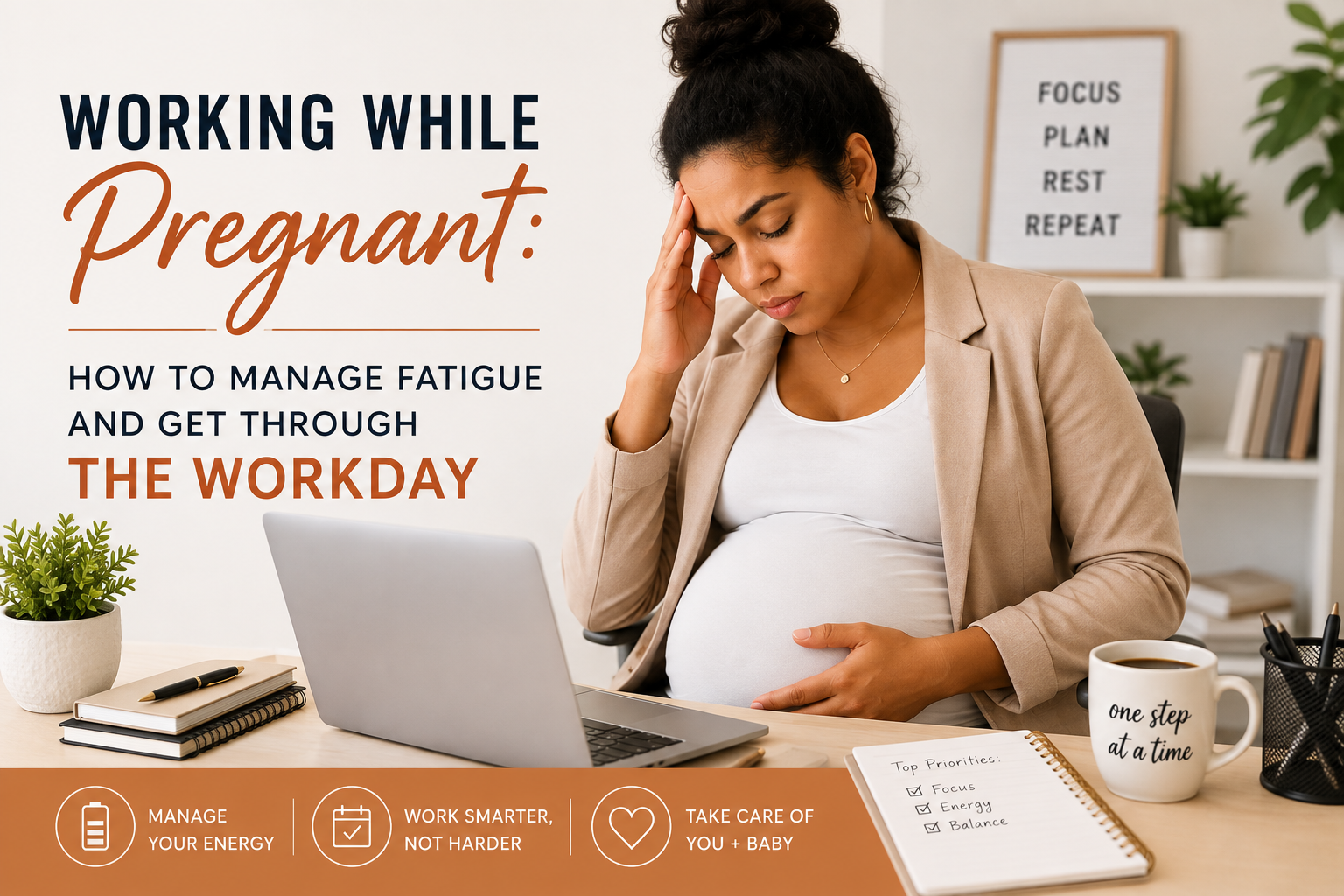
Pregnancy can be an exciting time, but when we’re working, it can sometimes feel like we’re doing two full-time jobs at once (because we are). While our bodies are working hard to support and grow tiny humans, our career responsibilities, meetings, deadlines, commute, and everyday obligations continue.
One of the most common challenges pregnant working moms experience is fatigue – both the mental and physical kind. It’s not uncommon to wake up tired in the morning, struggle through afternoon energy crashes, or arrive home feeling like you just have nothing left to give.
Pregnancy fatigue is common, particularly during the first and third trimesters. While we may not be able to eliminate it completely, we can make changes that help us conserve our energy and make our workdays just a little more manageable.
Here are some practical ways to get through the workday when pregnancy fatigue hits.
1. Accept That Your Energy Levels Will Change
One of the biggest adjustments during pregnancy is realizing that we won’t have the same amount of energy we had before. Growing humans is hard!
Before pregnancy, we could probably work all day, run errands afterward, prepare dinner, do some light cleaning, and still have energy left over for evening hobbies. During pregnancy, just getting through the workday feels like an accomplishment!
Instead of expecting to operate at a pre-pregnancy pace, it’s important to adjust expectations. The last thing we need during this time is added pressure, especially when doing everything like we used to is just not realistic.
Ask yourself:
- What absolutely needs to get done today?
- What can wait until tomorrow?
- What can I delegate?
- What can I simplify?
Pregnancy is temporary, and changing our routine doesn’t mean we’re becoming less productive. It means we’re learning how to work within a new, temporary normal.
2. Prioritize The Most Important Tasks
Creating a daily list of your top three priorities can help direct focus toward what matters most without feeling overwhelmed by a long to-do list.
Your body is doing some very important work right now, and it’s important to give yourself space for that. Don’t try to check everything off the to-do list at once – it’ll only wear you out.
When I was pregnant and working as a physical therapist, there were just 3 things I aimed to get done every day: 1) go to work, 2) take a walk outside OR cook (not both on the same day!), and 3) do some form of meditation or self care.
Prioritizing daily tasks wasn’t always easy, but taking the time to really think about and do it helped me tremendously in managing those long work days while pregnant.
3. Save Demanding Tasks For Times With The Most Energy
Another strategic approach to getting stuff done throughout the day when you’re pregnant and working is to match task difficulty with your actual energy levels. What does that mean? Simply put, it just means to do the harder things when you have more energy.
Pay attention to when you have the most energy during the day. For some women, that’s first thing in the morning. Others may feel better after breakfast or around mid-morning. If possible, try to get your demanding or difficult tasks done during those periods of relatively high energy.
For example, think about using high-energy times for projects requiring concentration, important meetings, presentations, or decision-making. Save simpler tasks such as responding to routine emails, organizing files, or completing administrative work for times when your energy is low.
4. Take Short Breaks Throughout the Day
When we’re busy, it can be tempting to work straight through the day. Sometimes we may not even recognize how much time has passed when we’re really into something. Taking short, scheduled breaks can actually help make sure we are taking care of our bodies and help us manage our energy better.
Set alarms every hour to stand up and stretch, walk around, drink some water, have a snack, step outside for fresh air, or simply close your eyes for a few minutes.
Even five minutes can make a big difference.
If you work from home, resist the temptation to remain at your computer for hours without moving. Set hourly reminders to stand up, stretch, and change positions.
Think of these breaks as strategic opportunities to recharge and manage your health rather than interruptions to your productivity.
5. Don’t Skip Meals
When we’re dealing with back to back meetings and deadlines, eating can quickly fall to the bottom of the priority list. Pregnancy, however, is not the ideal time to power through the day on coffee and a forgotten breakfast.
Try to start the morning with a balanced meal and keep convenient snacks available throughout the workday.
Depending on your dietary needs and your healthcare provider’s recommendations, convenient options might include fruit, yogurt, nuts, cheese, crackers, vegetables, or other easy-to-carry foods.
Keeping something at your desk, work bag, or office refrigerator can also help on unexpectedly busy days.
Rather than waiting until you’re extremely hungry, consider planning regular opportunities to eat throughout the day.
6. Stay Hydrated
Between meetings, phone calls, appointments, and bathroom trips, drinking water can easily become an afterthought. It happens to the best of us, especially on days when the work just keeps coming. But remember – your health is the priority right now. Work will always be there!
Keeping a water bottle at your desk or workstation is a good visual reminder to drink regularly. You can also set reminders every two or three hours to hydrate if you don’t spend a lot of time at a desk or tend to move around a lot at work.
If plain water isn’t appealing, try switching things up by adding fruit or choosing another pregnancy-appropriate beverage to make staying hydrated easier.
And yes, drinking more may mean additional trips to the bathroom. Consider those trips another opportunity to stand, walk, and take a quick break from the work grind.

7. Make Your Workspace More Comfortable
Small changes to our workspaces can have a surprisingly big impact as pregnancy progresses.
If you spend a lot of the day sitting, make sure your chair provides adequate support. A small cushion or lumbar pillow may help make sitting more comfortable.
It’s worth looking at your workstation setup to make sure it’s ergonomically sound to support your body and joints. In general:
- Knees and hips should be at about the same height when sitting (or knees just slightly lower than hips)
- Feet resting flat
- Shoulders relaxed, wrists at the same level as elbows or slightly lower when typing
- Neck at a neutral position (not looking up or down to read a screen)
You may also benefit from a footrest, comfortable shoes, or changing positions periodically.
If your job requires prolonged standing, walking, heavy lifting, repetitive movements, or other physically demanding activities, talk with your healthcare provider and employer about whether workplace adjustments may be appropriate.
As a physical therapist, I was always on the move while pregnant. I found opportunities to sit as much as possible when treating, made sure my shoes were the most comfortable I could find, and asked my colleagues for help when necessary.
The goal while working during pregnancy isn’t to prove how much discomfort you can tolerate. It’s to create a work environment that allows you to perform your job as comfortably and safely as possible.
8. Protect Your Lunch Break
Don’t let your lunch break become another work session or meeting.
It’s tempting to work through lunch in an effort to get ahead of the workload, but skipping that much-needed break may actually make us less productive. The brain and body need time to rest and recover, especially during pregnancy.
When possible, step away from your computer or workstation during the break. Eat your lunch somewhere different, take a short walk, sit quietly, listen to music, or simply give yourself a few minutes without work-related demands.
If you work remotely, you may even be able to spend part of your lunch break resting.
Twenty to thirty minutes of genuine downtime may leave you feeling more refreshed and productive than spending your entire lunch hour answering emails.
9. Simplify Life After Work
Managing pregnancy fatigue isn’t only about what happens between 9 and 5. What you do after work matters too.
This may be the time to temporarily lower your expectations around household responsibilities.
Choose simpler meals. Order groceries instead of walking through the store when your budget allows. Ask your partner or family members to help with household tasks. Consider doing laundry less frequently or breaking chores into smaller pieces.
Your home doesn’t need to be perfectly organized every evening.
Sometimes the best thing you can do after a long workday is eat dinner, take a shower, put on comfortable clothes, and go to bed early. Getting a good night’s rest is crucial for restoring our energy reserves for the next day.
10. Prepare for Tomorrow the Night Before
Pregnancy fatigue can make mornings especially challenging, so it’s a good strategy to eliminate as many morning decisions as possible the night before.
Before going to bed, consider:
- Choosing and setting out work clothes.
- Packing your lunch and snacks.
- Filling your water bottle.
- Putting necessary work items near the door.
- Checking your schedule for appointments or meetings.
- Preparing an easy microwavable breakfast.
Even 10 or 15 minutes of preparation can make your morning feel much calmer and help you conserve some energy for the workday.
11. Listen to Your Body
One of the most important strategies to managing pregnancy fatigue is learning to recognize when your body is asking you to slow down.
There may be days when you feel energetic and productive, and days when getting through basic responsibilities feels difficult. Pregnancy isn’t always predictable.
Listen to your body, rest when you can, make adjustments when necessary, and communicate with your healthcare provider if fatigue is severe, suddenly worsens, interferes significantly with your daily activities, or comes with symptoms that concern you. Sometimes significant fatigue can have causes that deserve medical attention.

You Don’t Have to Do It All
Working during pregnancy can require constant adjustments. Our bodies are changing, our energy levels fluctuate, and we are preparing for a major personal transition —all while continuing to meet professional responsibilities.
The goal doesn’t have to be maintaining exactly the same routine you had before pregnancy.
Instead, focus on getting through the workday in a way that protects your energy and leaves room for rest and relaxation. Some days will be less productive than others, and that’s okay.
Prioritize what matters. Take breaks. Take care of your mental and physical health. Accept help. Simplify your evenings. And when your body tells you that it needs rest, listen.
Pregnancy is a season. Your routines will continue to change as you move through each trimester, prepare for maternity leave, and eventually transition into life as a working mom.
For now, give yourself permission to slow down when you need to. You don’t have to do everything—you just need to focus on what matters most today.